
[How-To] Boot IGEL UD Pocket – Required BIOS/UEFI Settings
The IGEL UD Pocket allows IGEL OS to run directly from a USB device without replacing the operating system installed on the computer.
For this to work, the computer must support booting from USB storage and the BIOS or UEFI settings must allow it.
This guide explains which settings should be checked when an IGEL UD Pocket does not appear in the boot menu or does not start correctly.

Open the Boot Menu
Restart or power on the computer with the IGEL UD Pocket connected.
During startup, open the computer’s boot menu.
The exact key depends on the hardware manufacturer. Common examples are:
- HP: Esc or F9
- Lenovo: F12
- Dell: F12
- Acer: F12
- ASUS: Esc or F8
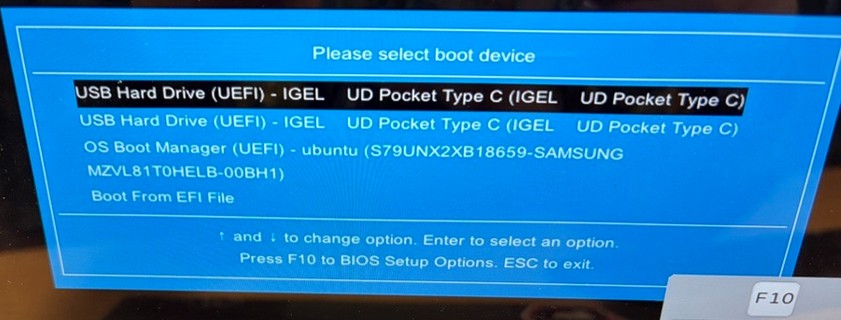
If the UD Pocket is detected correctly, an entry for the USB device should appear.
It may be displayed as the name of the USB device or as a UEFI USB entry.
Select the UD Pocket and press Enter.
UD Pocket Is Not Visible in the Boot Menu
If the UD Pocket does not appear, enter the BIOS/UEFI configuration.
Restart or power on the computer and press the BIOS/UEFI key immediately during startup.
The exact key depends on the hardware manufacturer. Common examples are:
HP: Esc, then F10
Lenovo: F1 or F2
Dell: F2
Acer: F2 or Delete
ASUS: F2 or Delete
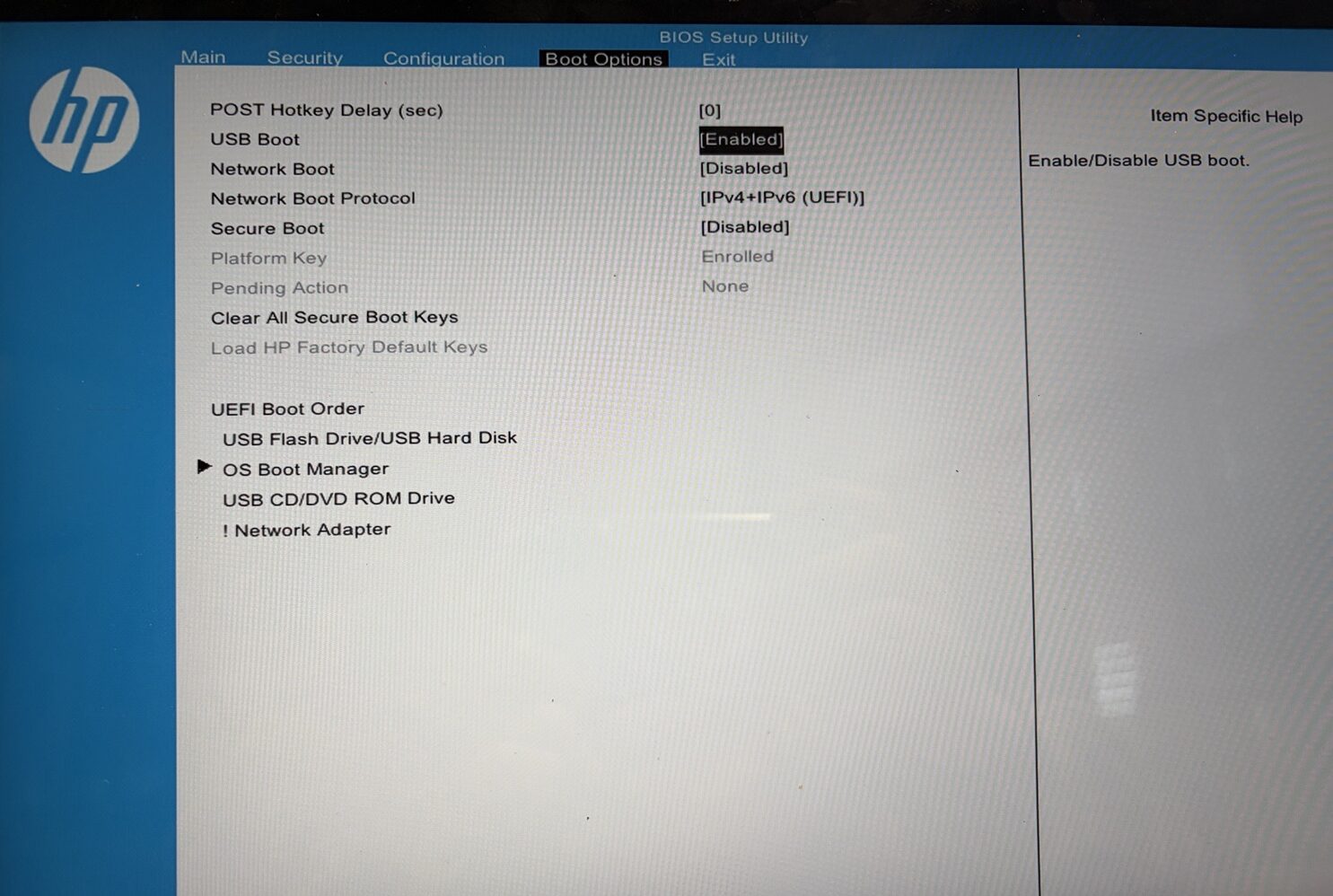
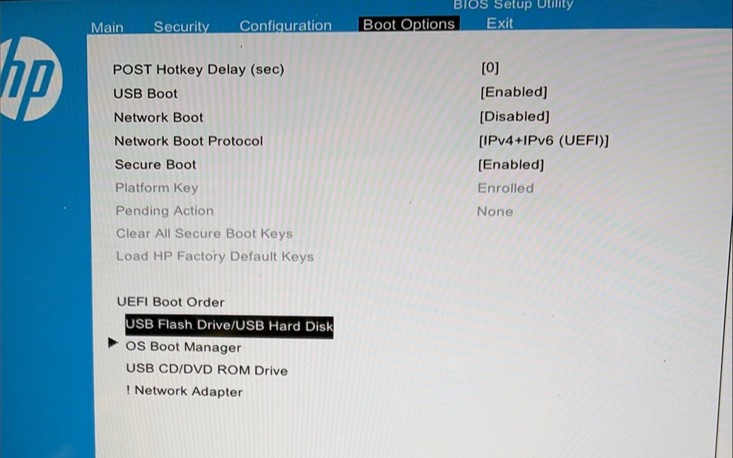
Enable USB Boot
Look for an option such as:
`USB Boot`
`Boot from USB`
`External Device Boot`
`USB Storage Boot`
Make sure the setting is Enabled.
Without USB boot support, the computer cannot start IGEL OS from the UD Pocket.
Check the Boot Mode
Modern computers normally use UEFI.
For IGEL OS 12, UEFI should normally be used when available.
Look for settings such as:
`Boot Mode`
`UEFI Boot`
`Legacy Boot`
`CSM`
For a modern IGEL OS 12 UD Pocket configuration, select UEFI.
Check Secure Boot
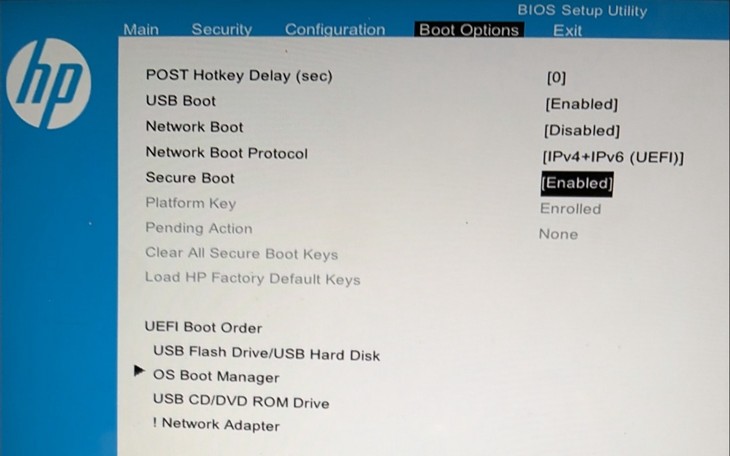
IGEL OS supports UEFI Secure Boot, so Secure Boot does not normally need to be disabled.
However, if the UD Pocket does not boot, check whether the BIOS contains an option such as:
`Allow Microsoft 3rd Party UEFI CA`
If available, this option should be enabled when Secure Boot is used.
Check the Boot Order
If the computer should automatically boot from the UD Pocket whenever it is connected, check the boot order.
Look for:
`Boot Order`
`Boot Priority`
`Startup Order`
Place the USB device before the internal SSD or Windows Boot Manager.
For occasional use, changing the permanent boot order is usually unnecessary. The one-time boot menu can simply be used instead.
Save the BIOS Settings
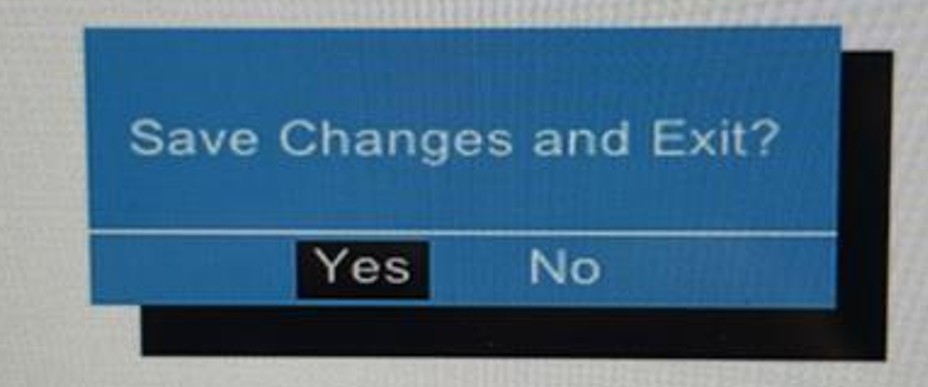
After changing the required settings, save the configuration.
This option is usually called Save & Exit.
Restart the computer with the IGEL UD Pocket still connected.
Open the boot menu again and select the USB device.
Start IGEL OS
If the BIOS/UEFI configuration is correct, the computer should now boot from the UD Pocket and start IGEL OS directly from the USB device.
The operating system installed on the internal disk remains unchanged.
Next Steps
If you’ve read this far then chances are you are still having issues. Feel free to reach out to us. We’re happy to help out!










Leave a Reply